
What Is a Crowd Control Barrier Used For?
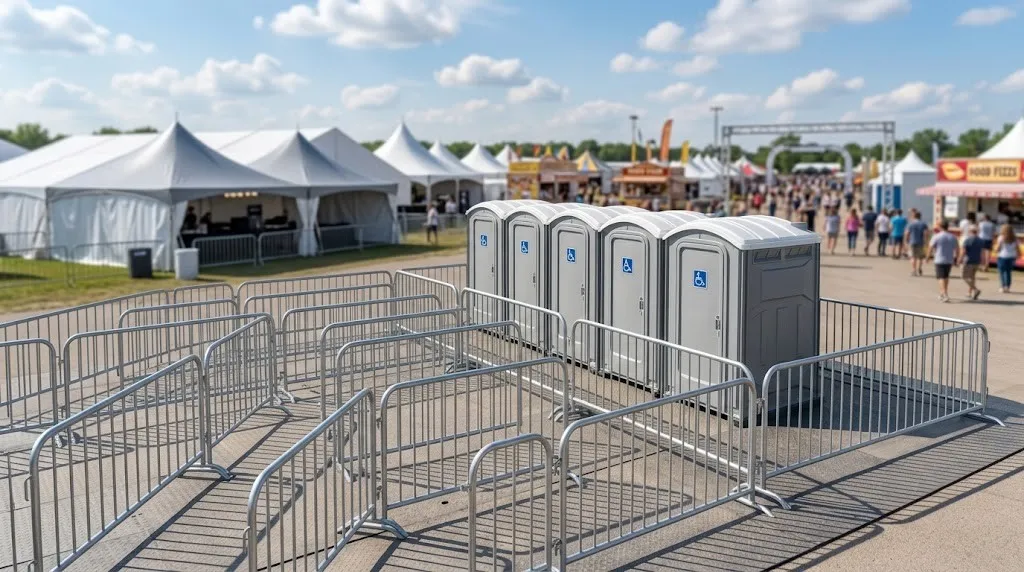
A crowd control barrier is a freestanding steel section that links to the next one, forming a line people cannot easily cross. Race organizers use them to hold spectators back from a course. Festival planners use them to define entry lanes and keep lines orderly near vendor rows. Construction crews use them along a sidewalk edge where a roll-off dumpster or storage container sits close to pedestrian traffic. OSHA 1926.202 requires that barricades protecting employees conform to ANSI D6.1, so if your barrier line doubles as worksite protection, not just crowd shaping, it needs to meet that standard. Lawrence Porta Pros sets sections at whatever spacing your layout calls for, tight near entrances, looser along a straightaway. If you are running a marathon or race, a county fair, or a concert, barrier count usually tracks with expected crowd size, not just perimeter length.
How Much Does Crowd Control Barrier Rental Cost in Lawrence?
Standard barriers rent by the day, and pricing depends on quantity and how long you need them on site. A single day of rental runs at the low end of the range below; multi-day events cost more per barrier because they're on site longer, not because the rate changes.
| Item | Day Rate |
|---|---|
| Crowd control barrier | $30 to $75 |
That price band covers delivery-ready steel barricades, not decorative fencing. If your event also needs a delivery charge for trucks bringing barriers, portable toilets or a restroom trailer, that's quoted separately based on distance and load size. Eudora sits 13.0 miles east of Lawrence and Tonganoxie is 17.8 miles northeast, both within normal delivery range without a long-haul surcharge. For temporary fence pricing alongside barriers, ask for a combined quote; bundling often saves a separate delivery trip.
Can I Rent Crowd Control Barriers for a One-Day Event in Lawrence?
Yes. Most Lawrence rentals are single-day pickups for weekend festivals, weddings and races, and Lawrence Porta Pros delivers and retrieves the same event weekend when needed. A wedding with 150 guests might need six to ten barrier sections to manage a parking area or a ceremony aisle; a golf tournament crossing several fairways needs more, spread along cart paths and viewing areas. Placement matters as much as count. ADA Standards section 403.5.1 sets a 36 inch minimum clear width for an accessible route, so any barrier line crossing a walkway needs a gap that wide left open, and a 60 inch turning circle under ADA Standards section 304.3.1 should be kept clear near any accessible restroom unit you've placed nearby. If your event also needs a handwashing station or an ADA accessible toilet inside the perimeter, plan that access before the barrier line goes up, not after. For farm events or agricultural fairs, see farm and agricultural restrooms for related layout guidance. Lawrence Porta Pros can walk your site plan with you before delivery day.
Do I need a permit for crowd control barriers in Lawrence?
Placement in a public right of way, like a street or sidewalk, typically needs city confirmation, and that hasn't been verified for Lawrence specifically. Check with the city before finalizing your layout. See porta potty permit requirements for related permitting context that may apply to your event footprint.
How many barriers do I need for my event?
It depends on perimeter length and crowd density, not a fixed formula. A tight entry lane needs fewer, closely spaced sections; a long race route needs many spread thin. Tell Lawrence Porta Pros your layout and expected turnout, and they'll recommend a count. See how many porta potties do I need for a similar sizing approach.
Can barriers be delivered with portable restrooms in one trip?
Yes, most Lawrence customers order both together. Combining barrier delivery with standard porta potty rental or a deluxe flushable unit on one truck run often reduces the total delivery fee versus two separate trips.
What's the difference between crowd barriers and temporary fencing?
Barriers are freestanding steel sections meant to guide foot traffic in short stretches. Temporary fence rental, especially chain link, secures a full perimeter over days or weeks. Many events use both: fence around the site, barriers at entry points.
Do barriers need to be ADA compliant?
The barrier itself isn't an ADA fixture, but any line you place must leave accessible routes open. ADA Standards section 403.5.1 requires a 36 inch clear path, so route your barrier layout around doorways, ramps and restroom access points before locking in placement.
Next step
Get a delivery date
Tell us the address, the dates and the headcount. We size the order and confirm the route.